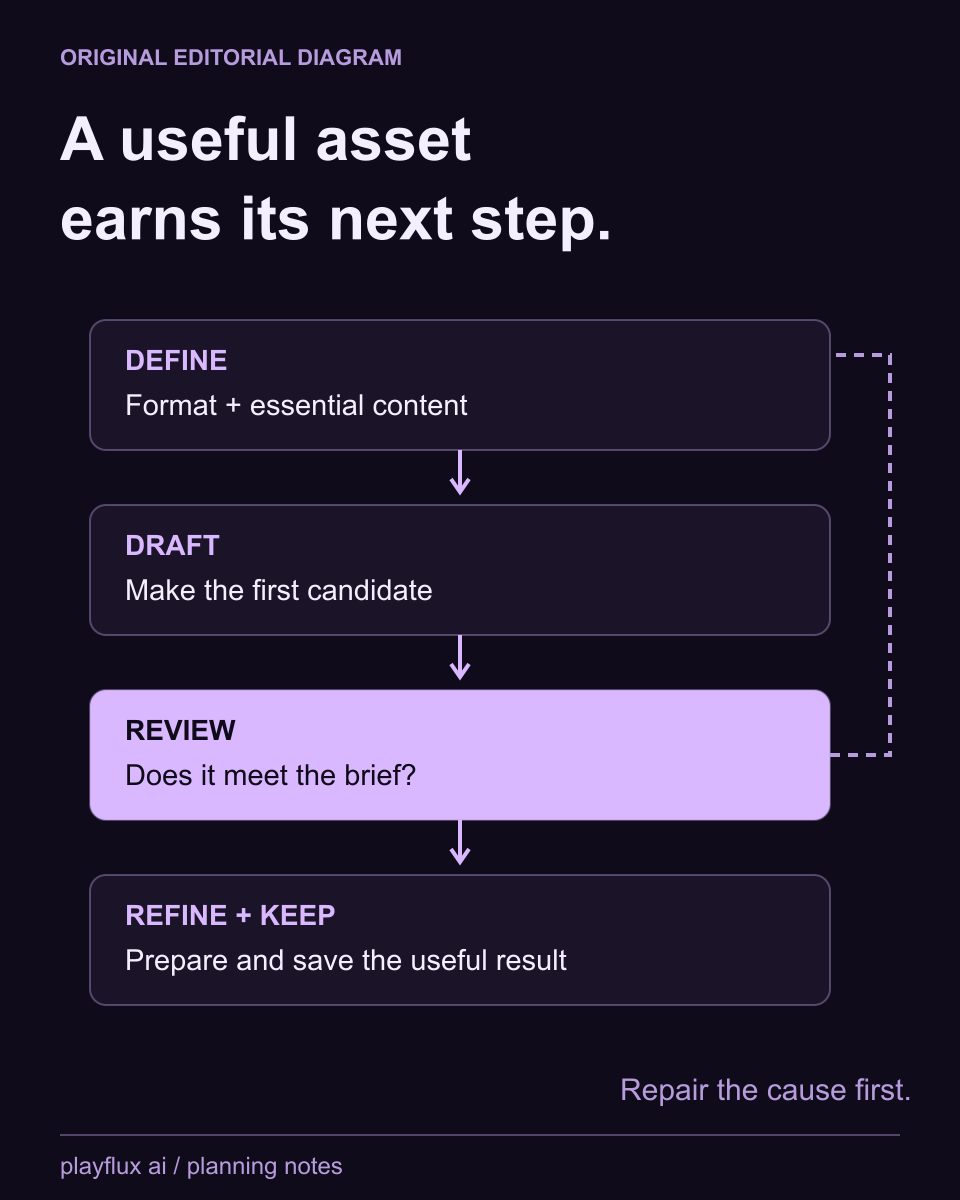
Define the final format.
A square concept image, a wide presentation background and a moving clip need different composition. Record where the asset will appear and which area needs empty space for text.
 PlayFlux AI Fieldnotes
A practical creative workflow desk
A good image or video workflow starts with a deliverable, a revision budget and a place to save the final file.
Browse a New ExperienceBuild your workflow plan ↓
01 / Starting direction
One operation or several?
The official FAQ describes a Workflow AI Agent that chains operations such as image creation and upscaling. The practical advantage is a deliberate sequence: solve composition, make a targeted refinement, then prepare the output.
A chain also introduces more places for an error. If the first image has the wrong subject or layout, increasing its size preserves the wrong thing more clearly. A useful production checkpoint is to inspect composition before upscaling. Confirm that the chosen interface lets you inspect, pause or restart at that point: the FAQ’s saved-chain description does not establish those controls.
02 / A visual direction to evaluate
A square concept image, a wide presentation background and a moving clip need different composition. Record where the asset will appear and which area needs empty space for text.
Keep subject, palette and camera direction in a small reusable brief. Change one uncertain element at a time so a useful result can be traced to a decision.
Decide which errors require another attempt and which can be accepted. A draft that meets the brief is often more useful than another unrelated variation.
A browser-local planning worksheet
Enter your own estimate from the current official interface. This arithmetic tool does not know PlayFlux prices, balances or model costs; it sends nothing to a generation service.
Make export a step, not an afterthought
PlayFlux’s indexed FAQ says generated content is typically kept for around 365 days. Its official privacy-policy text says 60 days for generated media and 15 days for uploads. These statements conflict, so neither is a dependable storage promise.
Download a useful result while it is available. Save the brief, relevant settings and final file together; name revisions so the accepted version is obvious. Before deleting an account or gallery item, check that the local file opens and that you have the version you intended to keep.
Questions before a larger project
The current rendered homepage emphasizes adult image alteration, while the older indexed official Terms expressly prohibit adult and explicit generation. Those first-party statements conflict. This guide stays with ordinary non-explicit creative assets, original fictional characters and data controls; it does not treat allowed use as settled or provide real-person alteration instructions.
The FAQ, checked October 16, 2026, lists one-time pay-as-you-go packs, including Basic at $19.99 for 20,000 credits, and separately lists VIP benefits. Its bonus wording does not justify adding another 10% to that stated bundle. Nor does a pack count establish per-operation rates or access to every model. Check the specific payment’s amount, term and inclusions.
Workflow, pack and policy descriptions here use readable indexed first-party text. They support the documented offer, while current account access, per-operation charges and specific chain controls remain untested. Confirm the selected model and operation in the provider interface before planning a production run.
Rights can depend on the input, model and intended use. Keep permission for reference material with your project notes and review the provider’s terms before distributing an asset. No universal commercial-use permission is claimed here.
Compare a weekend access term, saved character identity versus a saved chain, model eligibility, asset reuse rights and a prose deliverable.
Compare a one-time credit pack with a minimum subscription term using a 24-picture planning case and an explicit credit threshold.
Distinguish a saved identity from a saved generation chain before making the next batch of character scenes.
Choose between producing visual assets and developing a readable narrative, with practical checkpoints for each kind of deliverable.
Separate a one-time access purchase from generation costs and from permission to copy or redistribute a media asset.
Separate resource balances, model eligibility and mode restrictions so a positive balance is not mistaken for access to every generation route.